Dear reader,
Do you have imagination? You must! Even as the current definition of imagination is complex, vague, and sometimes self-contradictory, it is an indisputable reality that a faculty we call imagination exists in every human culture and all throughout known history. So it is something real – yet we might not clearly understand it just yet. My computer dictionary defines it as the faculty or action of forming new ideas, images or concepts of external objects not present to the senses. The Merriam-Webster online adds a little extra – it calls it the act or power of forming a mental image of something not present to the senses or never before wholly perceived in reality. I have yet to do research on the history of the term and its meanings, but looking at the picture of the lion-human in the last post, I can’t help but think about my imagination as a child.
As children generally do, I had an active and vivid imagination. I talked to all my toys – not just the dolls and stuffed animals, but my pens and pencils and erasers as well. After drawing I would put them in the drawer and tell them not to be afraid of the dark because I would surely be back to play with them again – I just had other things to attend to at the moment. I clearly knew they were objects; I just felt compelled to communicate with them. I also loved listening to stories and later became addicted to reading (still am!). One of my favorite books was a collection of five Beatrix Potter stories. Another – probably my most favorite book after I learned to read, was Vasilisa the Beautiful (also sometimes translated Vasilissa Most Lovely), a collection of Russian folk tales.
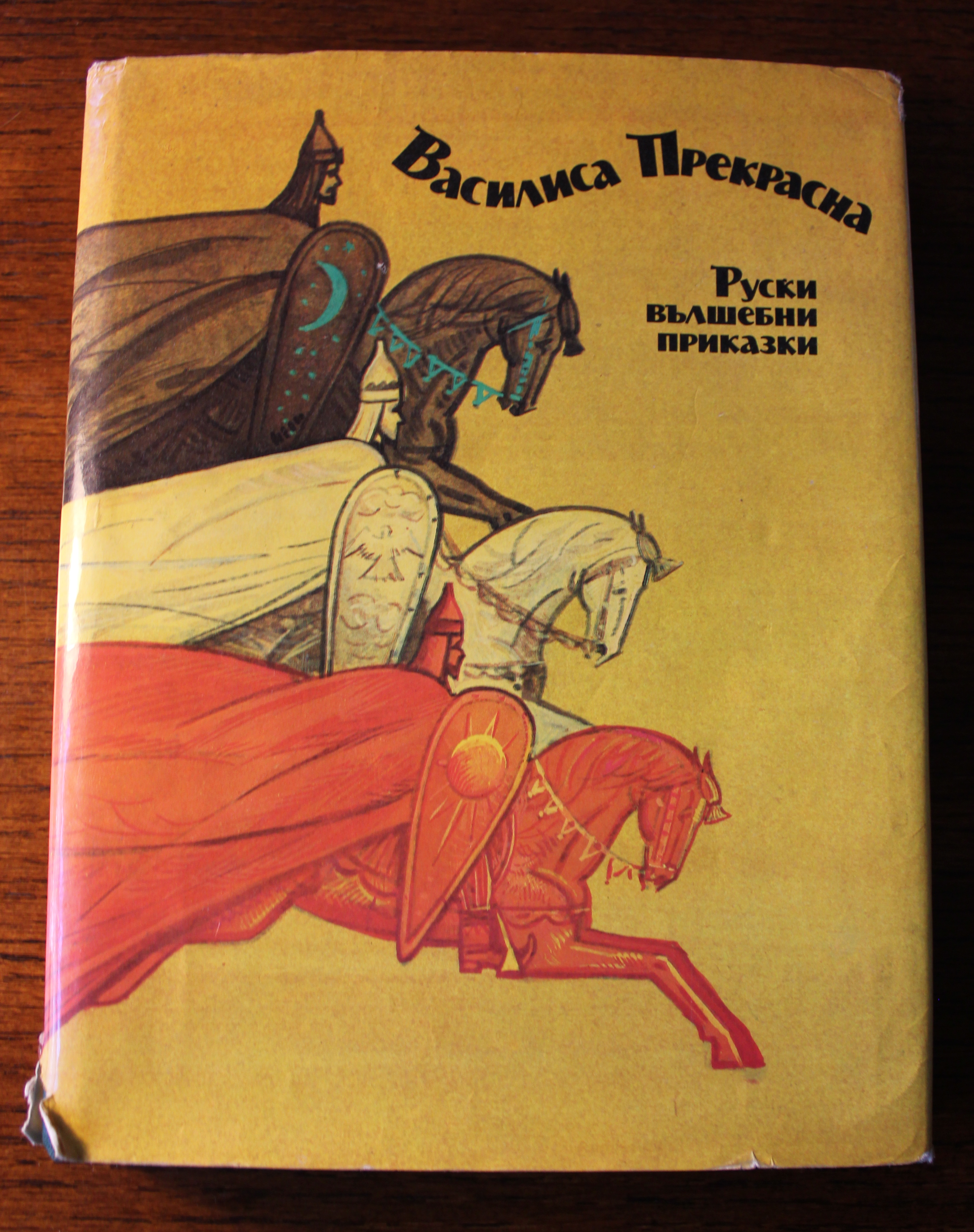
Talk about imagination! These stories have animals that become people and people that become animals, a doll that works and gives wisdom, golden apples, a bird with feathers of fire – the Firebird!
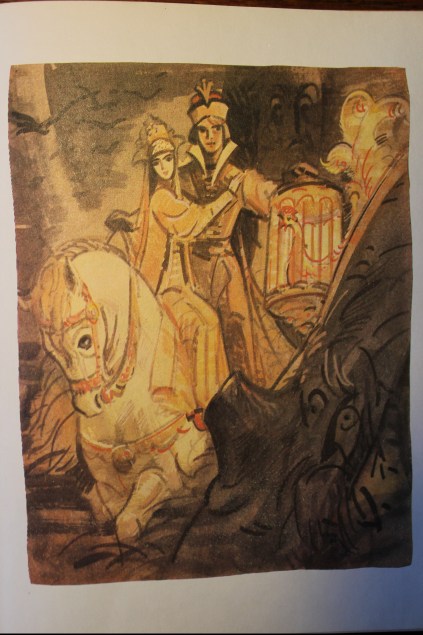
And this is just the beginning – how about the dead water and living water, rivers of fire or milk, and mythical creatures like Koschei (or Koshchey) the Deathless whose soul is hidden in a needle, and Baba Yaga who lives in a house on chicken legs!

Theirs is a big and colorful world where everything is alive, and talks, and listens, and acts, and feels.
Yet in all these stories, there are the most ordinary of human characters – poor and rich, generous and jealous, kings and servants, children and parents, young men looking for wives and young women looking for husbands. And most of all – a story that always without fail, after initial disaster and many difficulties, brings the protagonist into peace and prosperity, and invites the listener to go and visit.
Reading those stories, I don’t think I ever wondered if they were true or not. They were true – I was reading them! They were a joyful feast to the mind and senses, and they also carried instructions on what behavior led to the success of their protagonist. And those instructions I carried with me in life just as much as the wonderful images from the pages.
 Art and the Invisible