What I thought would be an easy post turned into a much more difficult and time consuming in-depth look into words, facts, and theories. And it isn’t finished yet. So here is the beginning.
Besides all the facts about art always being present where humans are present, there is something else to consider. If one is to make any object, or tell or sing anything, he necessarily has to make choices about how to do that, or select a manner of executing his task.
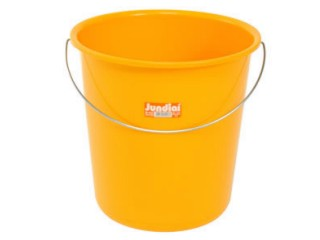
For example, plumbing didn’t always exist, and even today, we don’t have it everywhere. So sometimes we need a vessel to carry water from one place to another. For that purpose we have something called a bucket.
Yet in ancient Greece, the buckets looked a bit different. Like this:
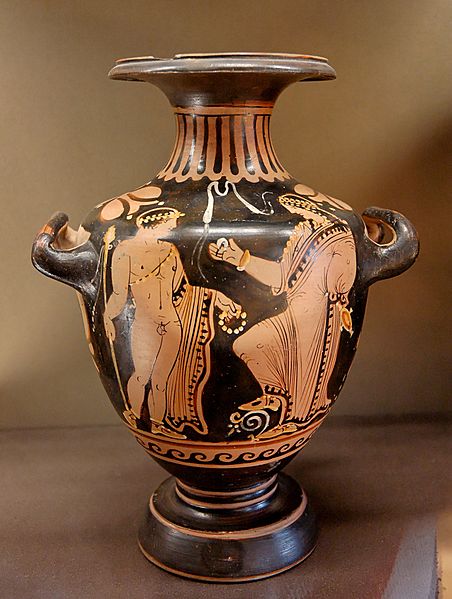
They are both the same – a container with hollow space that can hold liquids. Yet they are so different. It isn’t simply that one has paintings and the other a company logo. The shape is different – one has a base and a neck and the main part has great difference in diameter – smaller at the bottom and much bigger at the top, forming a specific shape; the other has no base or neck and almost the same diameter throughout. So why are they different? Because their maker made different choices in designing them. In our contemporary English, this is called style. And when I searched what style is, I came upon many different definitions, facts, and theories, which made this topic much bigger than I thought it was.
However, here is something I find a fact: if you are to make anything – whether it is a bucket or something else that never existed before – like an iPod – you necessarily have to make choices about how to fulfill your desired purpose. So are these choices a style? How do they become a style? Before there was anything identified as a Baroque or a Cubist style, how were these choices made?
 Art and the Invisible
One thought on “The How of Making Things”