Dear reader,
A mini-exhibit within the South Asian section caught my attention. Please read the following description concerning it.

Please forgive the quality of the pictures – most of them are taken with my iPhone in the quite dark museum environment while trying not to disturb other visitors!
Notice the statements: “The … imagery of Tibetan thangkas … is generally paralleled in the painted decoration of … Tibetan furniture;” “Various animals, flowers, and auspicious symbols … have religious … significance, are imbued with special meaning, are also portrayed as virtual offerings in paintings used during rituals performed to obtain earthly blessings, such as wealth or longevity, or to overcome negative forces that prevent enlightenment.”
Here are some examples, the second picture showing the description of the object:
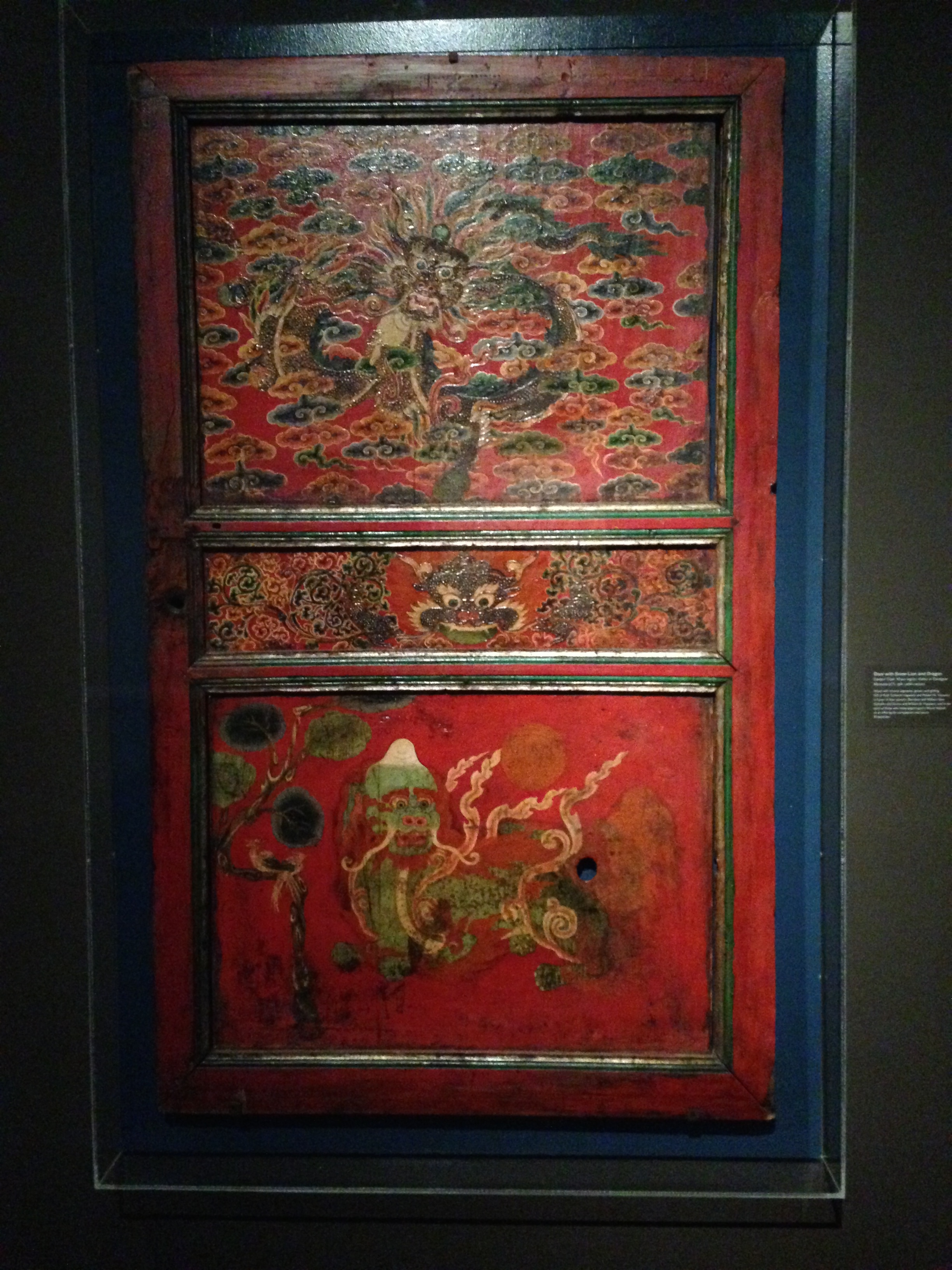
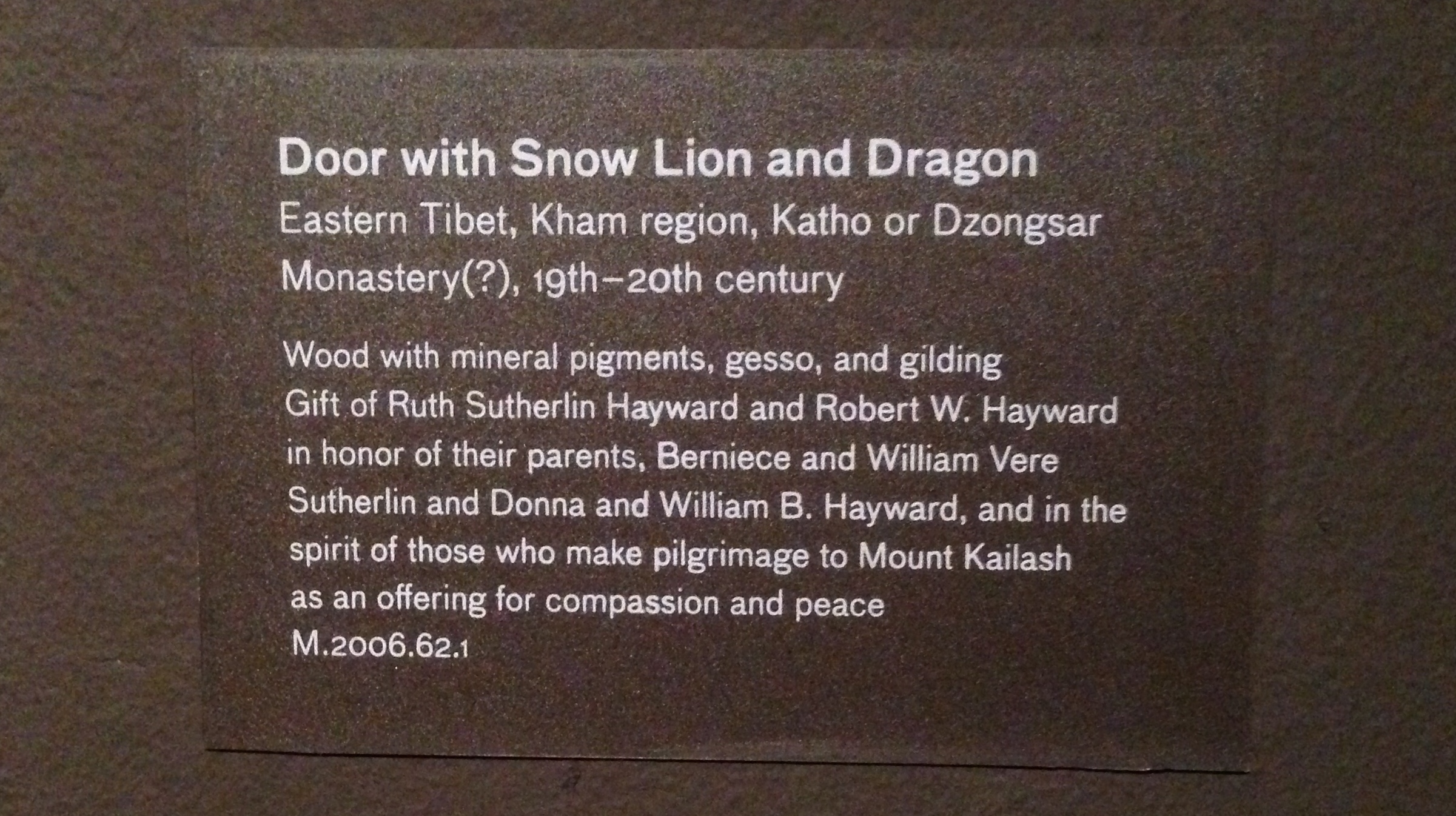

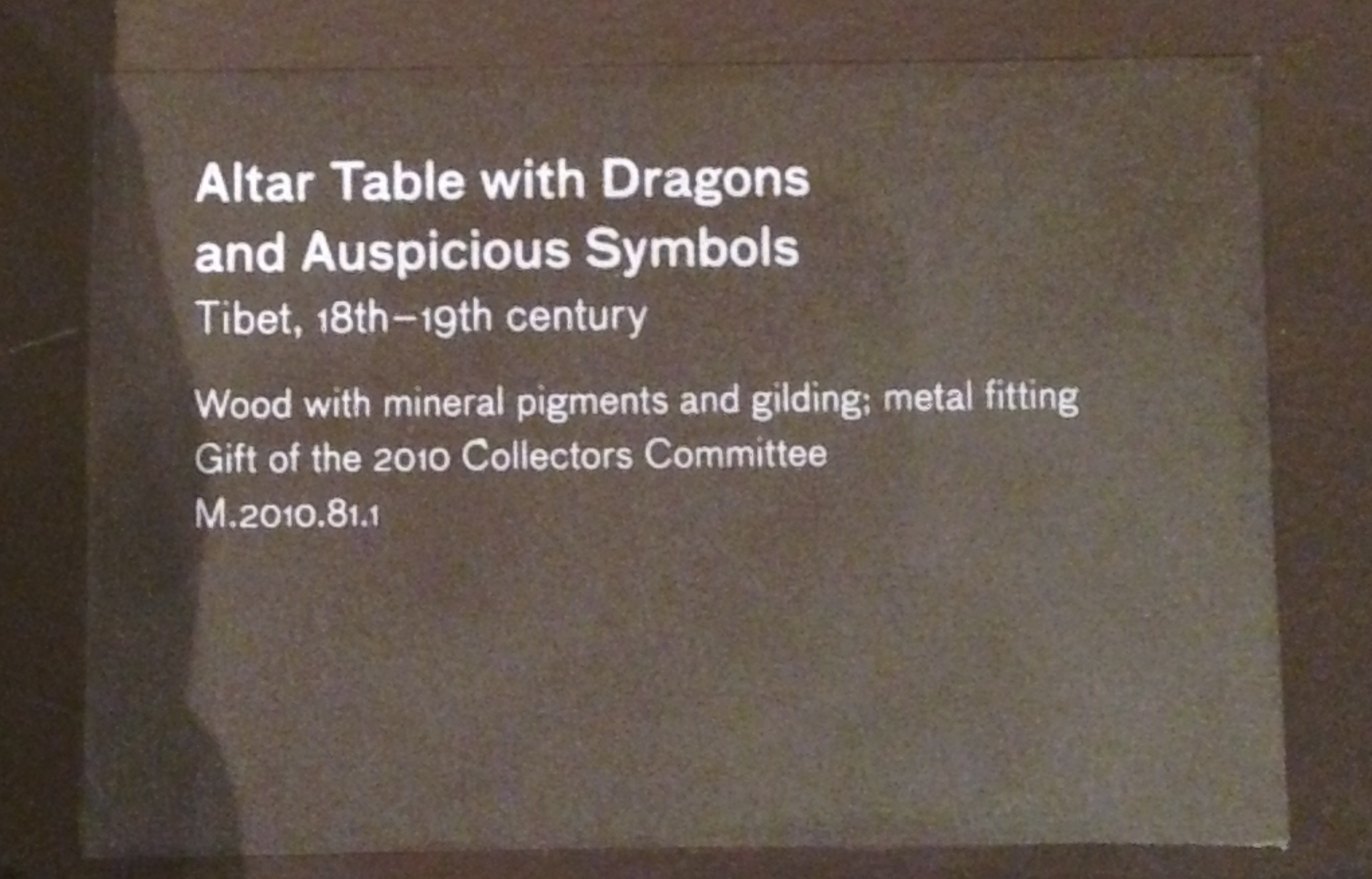
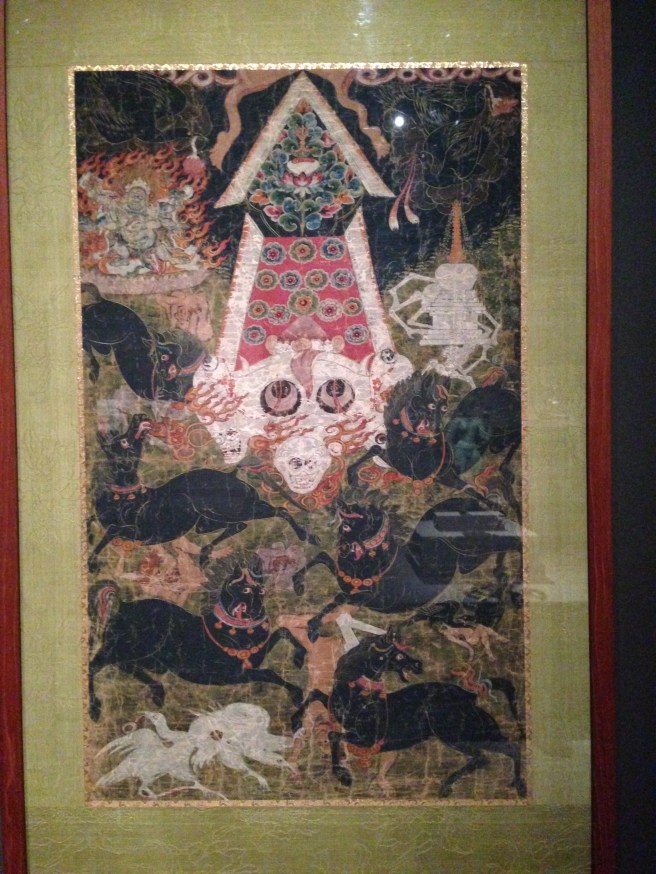

Notice the dates on these – 18th through 20th century, in other words – very late, very close to contemporary. Here is an earlier thangka.

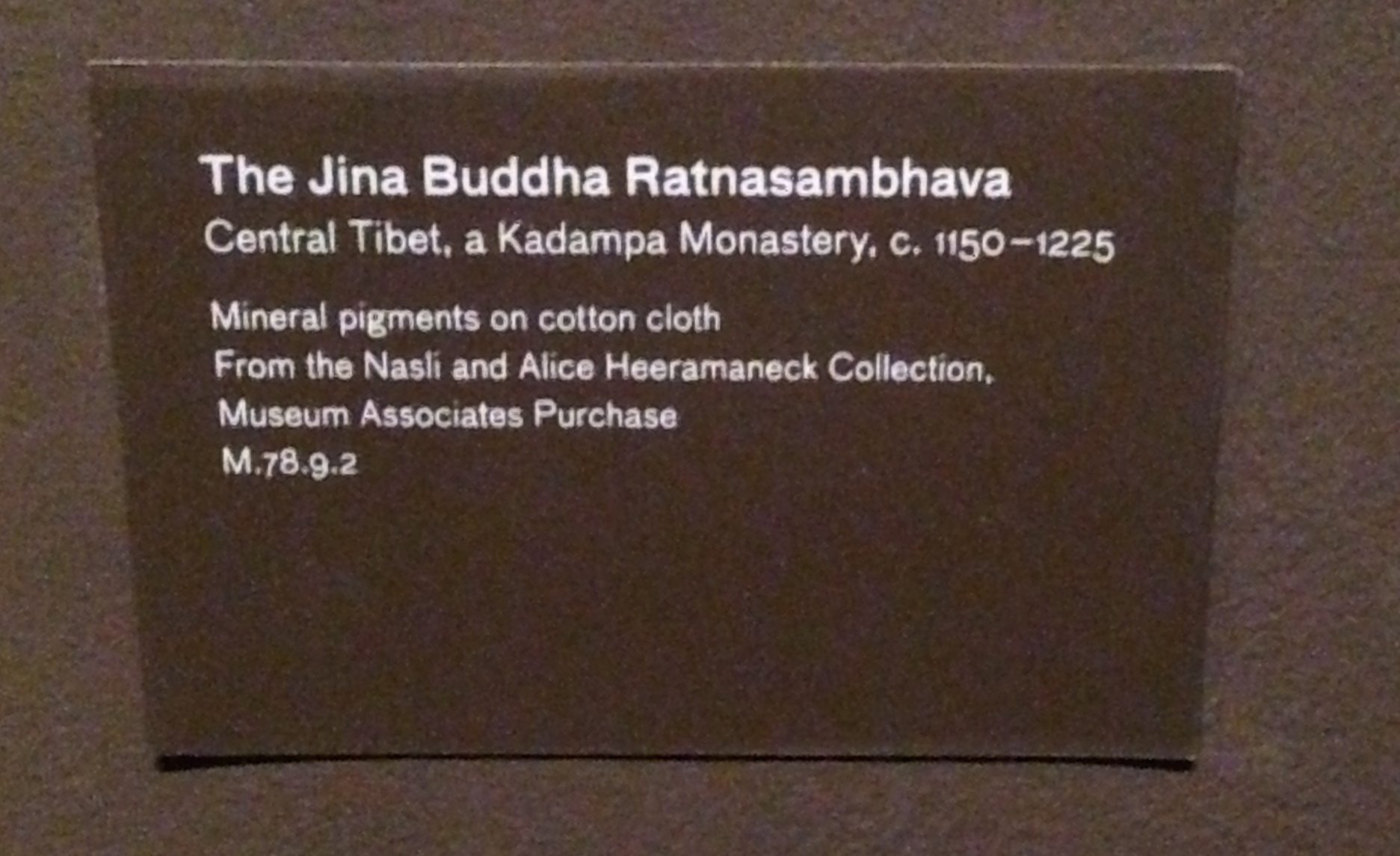
As mush as the exhibit is to show that the imagery of furniture is freer and more varied than that of the religious scrolls, I see the similarities as a lot more important and telling than the differences. When the thangkas were made, their images were with practical purposes for the users – a connection to an enlightened being, acquiring long life or wealth, and control over spiritual forces for the benefit of the individual.
Here is what Kathryn Selig Brown writes on Tibetan Buddhist Art on the Metropolitan Museum website:
Many sculptures and paintings were made as aids for Buddhist meditation. The physical image became a base to support or encourage the presence of the divinity portrayed in the mind of the worshipper. Images were also commissioned for any number of reasons, including celebrating a birth, commemorating a death, and encouraging wealth, good health, or longevity. Buddhists believe that commissioning an image brings merit for the donor as well as to all conscious beings. Images in temples and in household shrines also remind lay people that they too can achieve enlightenment.(http://www.metmuseum.org/toah/hd/tibu/hd_tibu.htm)
What was interesting to me was that the freer expressions were all examples made in the last 3 centuries – very recent and close to contemporary. My point is this – because today we live in secularized societies (a process that started a few centuries ago), particularly in the so-called 1st world countries, we have allocated religion to a small section of our daily reality, connected mainly with rituals that make us feel good. However, historically, religion was the sum total of a person’s entire understanding of and relation to the world around him, and what we call art today was a tangible form of a person’s connection to the invisible beings and forces around him he saw as real.
 Art and the Invisible